


Indirect Sinus Surgery with the Hiossen Cas Kit



Venue
Venue to be announced via email
Introduction to Indirect Sinus Lift with Hiossen CAS Kit
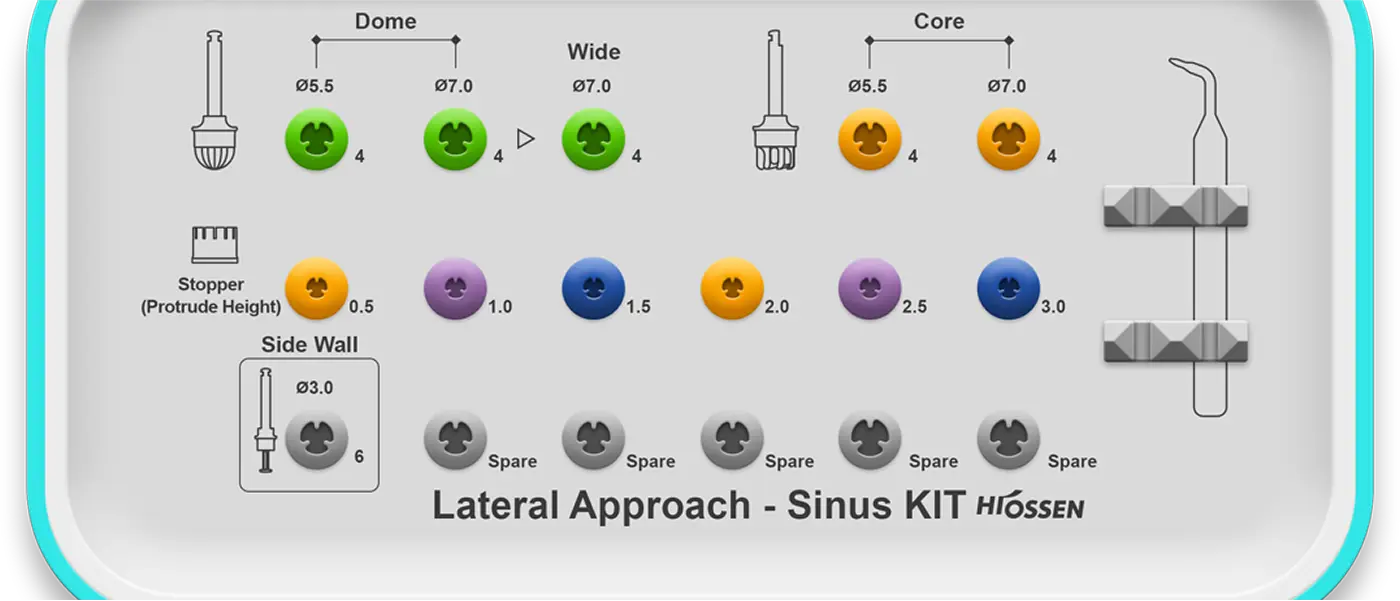
Indirect sinus surgery, or the crestal (transalveolar) sinus lift, is a minimally invasive technique used to elevate the Schneiderian membrane and place bone graft material through the alveolar ridge. The Hiossen Crestal Approach Sinus (CAS) Kit is specifically designed to perform this procedure safely and efficiently. It utilizes a combination of atraumatic, dome-shaped drills, stoppers, and membrane lifters to minimize the risk of membrane perforation, a key concern in sinus elevation procedures.
Anatomy and Case Selection
Duration:
2 Weeks
- Maxillary sinus anatomy and variations
- Radiographic assessment (CBCT evaluation)
- Indications and contraindications for crestal sinus lift
Payment Break-up:
Introduction to the Hiossen CAS Kit
Duration:
2 Weeks
- Components and functions (drills, stoppers, lifters)
- Safety features and handling protocols
- Kit sterilization and setup
Payment Break-up:
Surgical Technique and Workflow
Duration:
3 Weeks
- Step-by-step crestal sinus lift protocol
- Use of depth-controlled drilling and hydraulic membrane lift
- Bone graft placement and simultaneous implant insertion
Payment Break-up:
Postoperative Care and Management
Duration:
2 Weeks
- Healing timeline and implant osseointegration
- Monitoring sinus health and graft stability
- Managing complications (e.g., membrane perforation, sinusitis)
Payment Break-up:

Frequently Asked Questions
What is the advantage of using the Hiossen CAS Kit over conventional sinus lift techniques?
The CAS Kit offers a minimally invasive, predictable approach with reduced risk of sinus membrane perforation and faster recovery times compared to lateral sinus lifts.
How much residual bone height is required to use the CAS Kit?
A minimum of 5–6 mm of native bone is typically required to safely use the crestal approach with this system.
What makes the drills in the CAS Kit different?
The CAS drills have non-cutting dome-shaped tips designed to gently push and elevate the sinus floor rather than perforate it, enhancing membrane safety.
Can implants be placed immediately after using the CAS Kit?
Yes, in most cases with adequate primary stability, immediate implant placement is possible after sinus elevation using the CAS Kit.
What type of graft material is used with this technique?
Particulate bone grafts (such as xenografts or alloplasts) are most commonly used to support membrane elevation and new bone formation beneath the sinus.


